Kapālabhāti
कपालभाति
One minute of strokes. Then the part that matters, when the breath does not come and you wait for it.
How it is done
Read this once. It takes a minute and it is the whole practice.
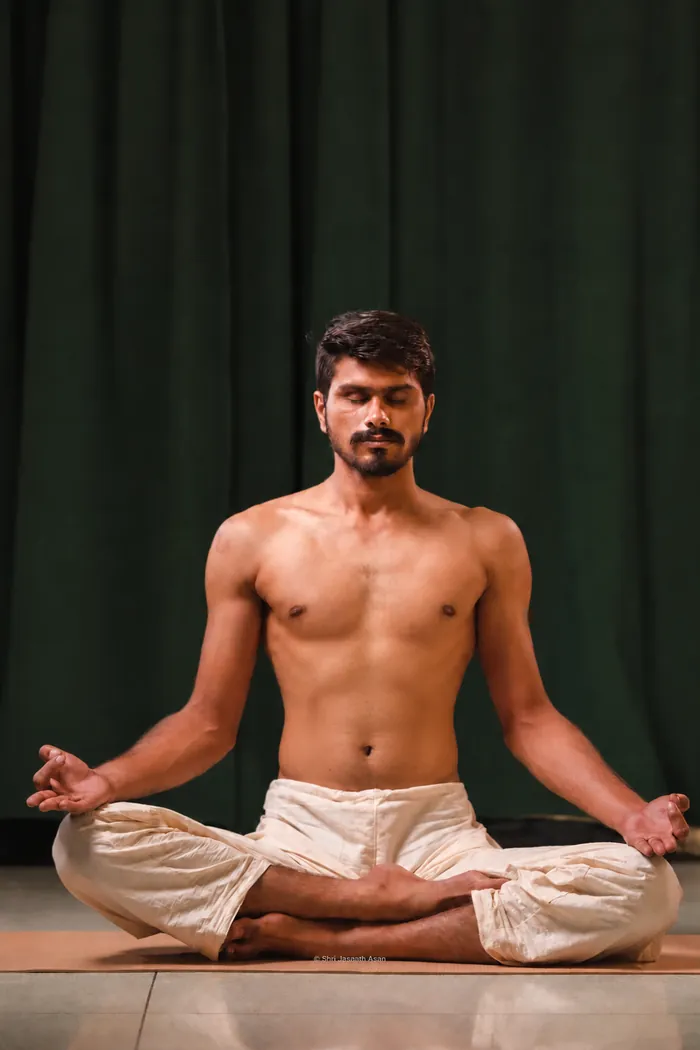
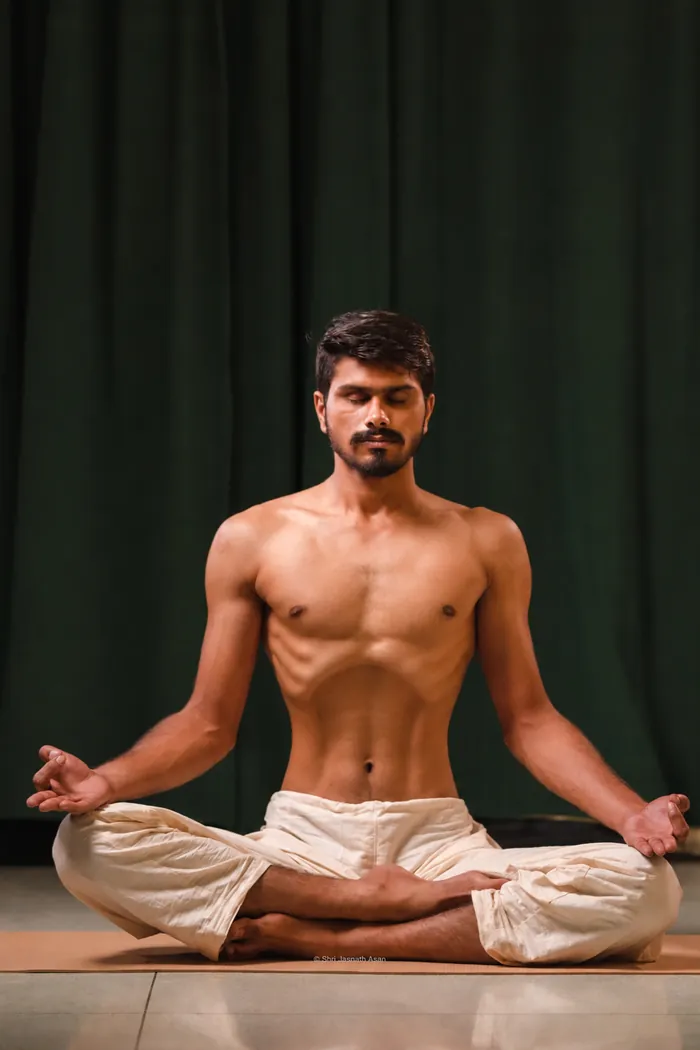
- Sit upright. Padmāsana, sukhāsana or vajrāsana, whichever your knees allow. Spine straight, shoulders loose, eyes closed.
- Breathe in easily, not fully. This practice is not interested in the in-breath.
- Now push the air out through the nose in one sharp stroke, by pulling the abdomen in. The face stays soft. The shoulders do not lift.
- Let the abdomen go. The breath comes back in by itself. Do not help it.
- That is one stroke. Keep the rhythm even, at whatever rate you have chosen, for one minute.
- When the minute ends, breathe out once and then stop. Do not breathe in yet, and do not hold. Wait, and let the breath ask for itself.
Before you begin
Half a minute. Then we start.
- Do not practise this if you have uncontrolled high blood pressure, heart disease, a hernia, epilepsy, an ulcer, recent abdominal or chest surgery, or if you are pregnant. Ask a doctor first.
- Never in water, never at the edge of anything, never standing. The gap removes the urge to breathe, not the need for it, and a man who faints should fall onto a mat.
- If you feel dizzy, if your hands tingle, if the head goes light, stop and breathe normally until it passes. That is the practice telling you the rate is too high today, and nothing is lost.
- Empty stomach, or at least two hours after eating.
- The abdomen does the work. If the chest is heaving or the shoulders are lifting, slow down until they stop.
- Never force the gap. It is not a test of how long you can go without air.
- This supports treatment. It does not replace it, and anybody on buprenorphine or methadone stays on it.
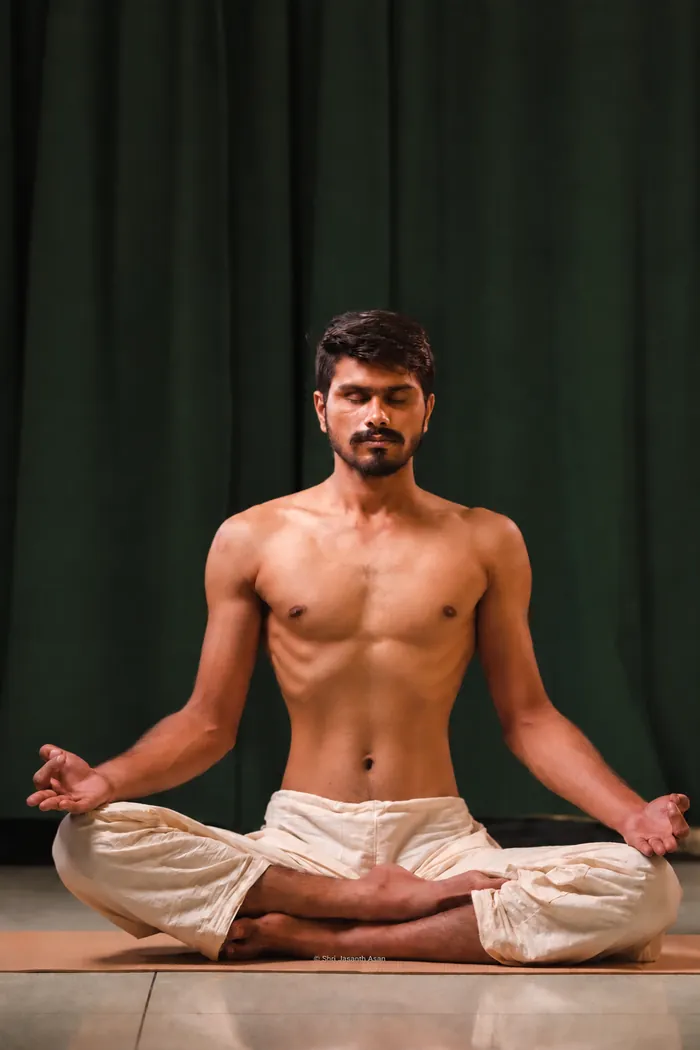
The breath stayed away
Nothing here is kept and nothing is sent anywhere. The field is yours, and it is only ever tonight's.