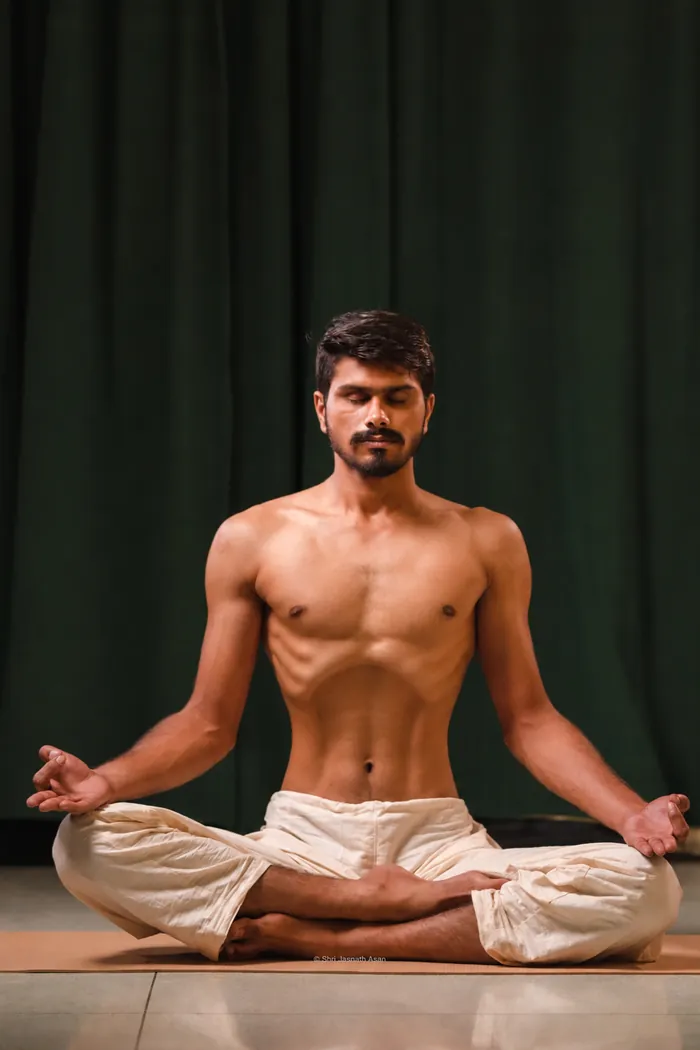
Kapālabhāti

कपालभाति

One minute of strokes. Then the part that matters, when the breath does not come and you wait for it.

Why this works

How it is done

Read this once. It takes a minute and it is the whole practice.
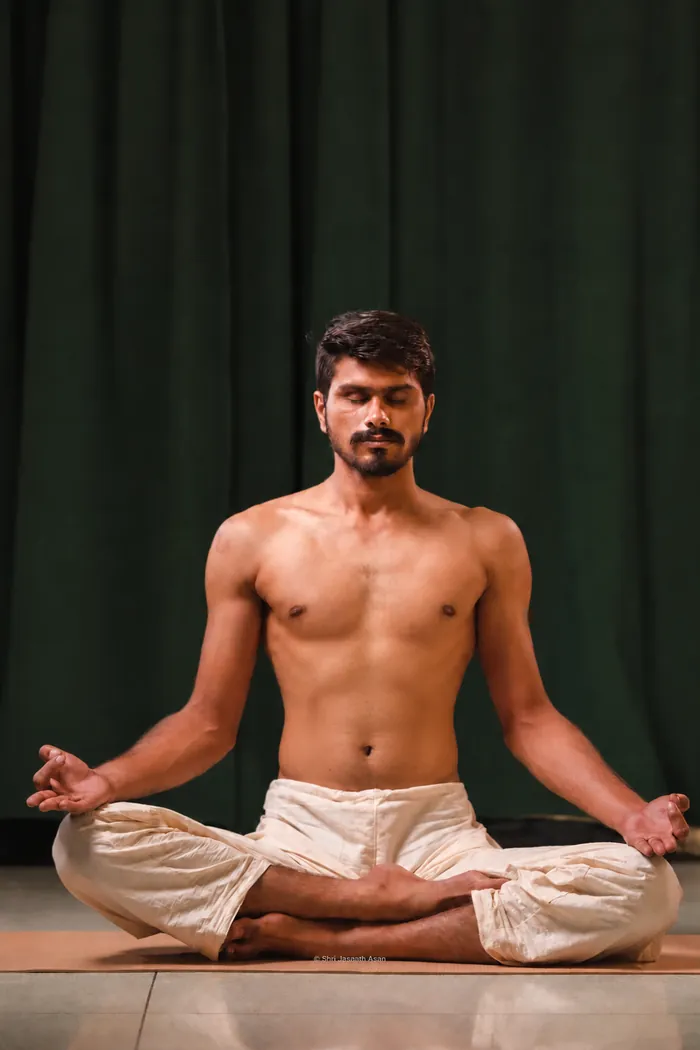
The belly full. Nothing is being done here. This is where every stroke starts from and returns to.
The belly snapped in. This is the stroke: one sharp push out through the nose, and the abdomen does it, not the chest.
The stroke is quick and the return is slow. Out is done; in happens. If the two halves feel the same length, the practice has turned into panting.
  1. Sit upright. Padmāsana, sukhāsana or vajrāsana, whichever your knees allow. Spine straight, shoulders loose, eyes closed.
  2. Breathe in easily, not fully. This practice is not interested in the in-breath.
  3. Now push the air out through the nose in one sharp stroke, by pulling the abdomen in. The face stays soft. The shoulders do not lift.
  4. Let the abdomen go. The breath comes back in by itself. Do not help it.
  5. That is one stroke. Keep the rhythm even, at whatever rate you have chosen, for one minute.
  6. When the minute ends, breathe out once and then stop. Do not breathe in yet, and do not hold. Wait, and let the breath ask for itself.

Before you begin

Half a minute. Then we start.

  • Do not practise this if you have uncontrolled high blood pressure, heart disease, a hernia, epilepsy, an ulcer, recent abdominal or chest surgery, or if you are pregnant. Ask a doctor first.
  • Never in water, never at the edge of anything, never standing. The gap removes the urge to breathe, not the need for it, and a man who faints should fall onto a mat.
  • If you feel dizzy, if your hands tingle, if the head goes light, stop and breathe normally until it passes. That is the practice telling you the rate is too high today, and nothing is lost.
  • Empty stomach, or at least two hours after eating.
  • The abdomen does the work. If the chest is heaving or the shoulders are lifting, slow down until they stop.
  • Never force the gap. It is not a test of how long you can go without air.
  • This supports treatment. It does not replace it, and anybody on buprenorphine or methadone stays on it.
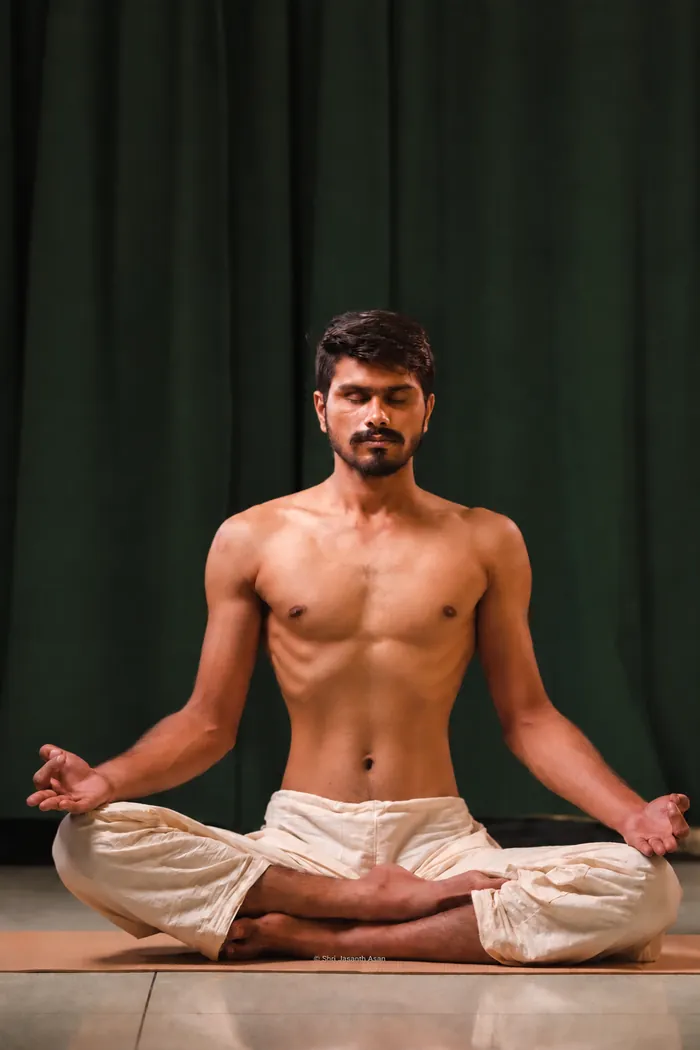
The belly full. Nothing is being done here. This is where every stroke starts from and returns to.The belly on its way back out, on its own.The belly snapped in. This is the stroke: one sharp push out through the nose, and the abdomen does it, not the chest.

The breath stayed away

Nothing here is kept and nothing is sent anywhere. The field is yours, and it is only ever tonight's.

The reasoning

Why a minute of hard breathing ends in silence

A fair question, and the honest answer is in four parts. The last one is the limit of what we can say.

1. It is not a calming breath, and it is not meant to be

Most of what this protocol asks of the breath is slow and even. This is the opposite and it is in a different category of practice altogether: a kriyā, a cleansing, not a prāṇāyāma. Sixty sharp exhalations a minute drive the sympathetic side up, not down. The point of it is not to settle you. The point of it is what happens when it stops.

The abdominal wall and the diaphragm do all the work and the chest does none. That is why the photograph above matters more than any sentence here: a man who does this with his shoulders is doing a different and less useful thing.

2. Why the breath does not come afterwards

You have a sensor that decides when you must breathe, and it does not measure oxygen. It measures carbon dioxide. A minute of forced exhalation washes a great deal of that out, and with it goes the signal that says now. So for a while nothing asks. That silence is not imagination and it is not willpower. It is a measurable state, and it is the whole reason this practice was placed where it is.

And that is exactly why it must never be pushed. The urge is gone; the need is not. A man can be perfectly comfortable and still be running out, which is why every serious teacher says never in water, and why this page will not put a clock in front of you to beat.

3. Why this practice, for this man

Opium works on the same sensor. Blunting it is not a side effect of the drug, it is how the drug kills: the carbon dioxide climbs, the alarm that should scream stays quiet, and the breathing simply slows and stops. Every man reading this has been walking around with that alarm turned down for years.

Here he turns it down himself, on purpose, for thirty seconds, and then feels it come back. There is a difference between being told your breathing was in danger and feeling the exact reflex that was taken from you return under your own hand, in your own courtyard, with nobody holding you down. That is not a metaphor. It is the same receptor population.

4. What we cannot say

Nobody has tested kapālabhāti in opioid withdrawal. Not us, not anybody. What is known about the practice comes from healthy volunteers and from general trials, and what is known about the chemoreflex in opioid use comes from a separate literature that was not thinking about yoga at all. Joining the two is our reasoning, and reasoning is not evidence.

So we will not tell you this repairs anything. We will tell you what the practice does to the breath, which is not in dispute, and leave the rest where it belongs, which is in front of a journal and not in front of a man at two in the morning.

back to phase two →