Yogic Breathing

योगिक श्वास · सेक्शनल ब्रीदिंग

Four sections, ten breaths each. The belly, then the chest, then the collarbones, and then all three as one breath.

How long is one breath
Why this works
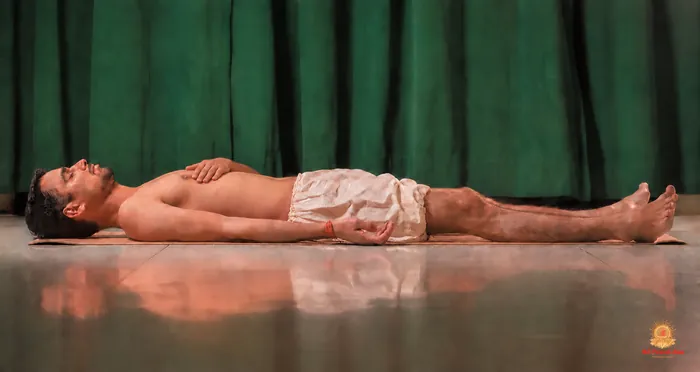
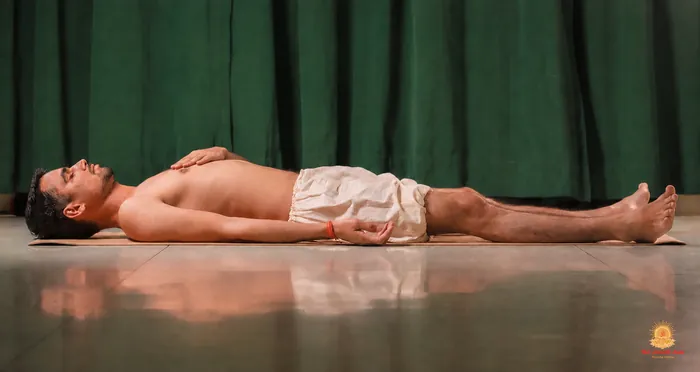
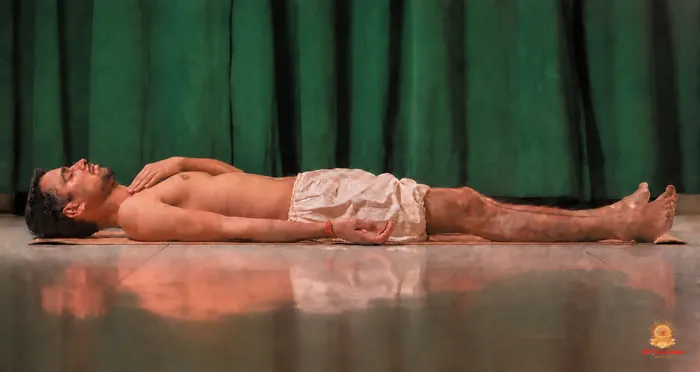
One hand on the belly and one on the chest, through all four sections. You cannot see your own breathing and you will be wrong about it. Your hands will not be.
Let your hands tell you One hand on the belly and one on the chest, through all four sections. You cannot see your own breathing and you will be wrong about it. Your hands will not be.

Abdominal breathing

The lowest and largest part of the breath, and the one almost everybody here has stopped using.

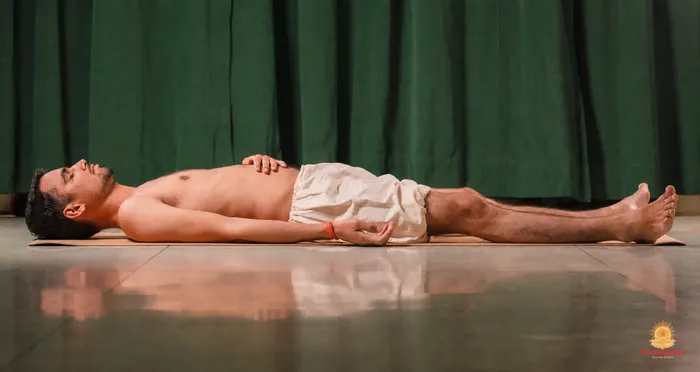
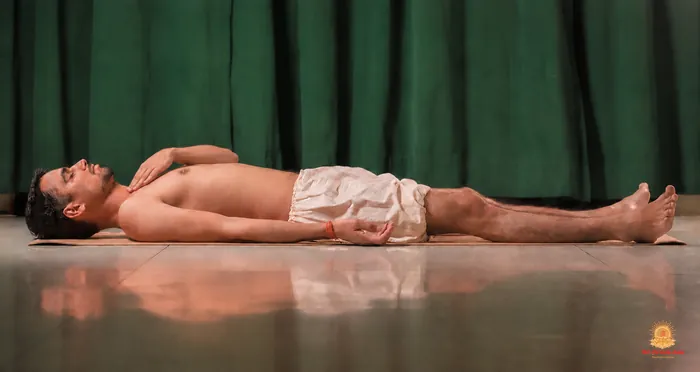
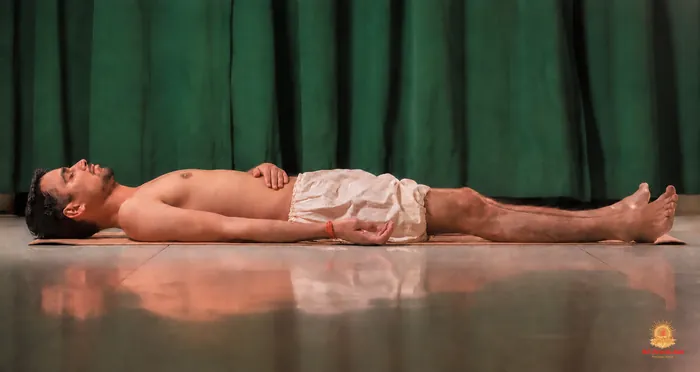
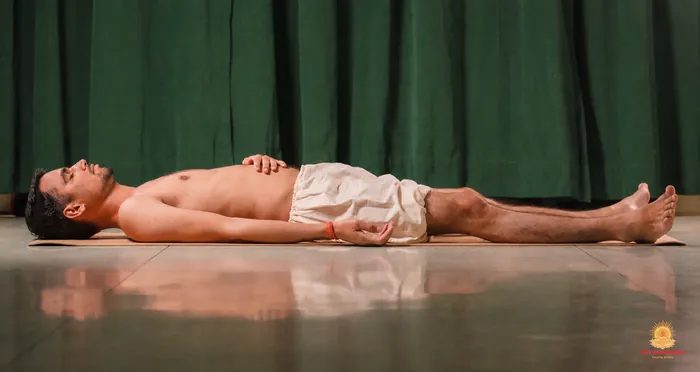
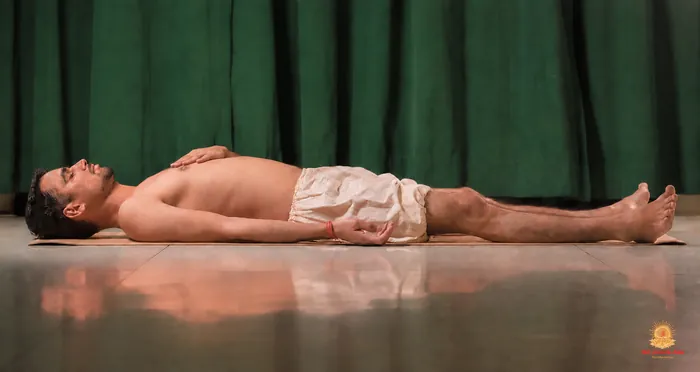
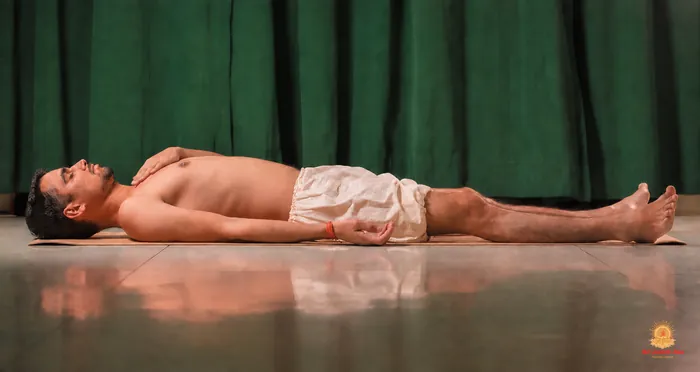
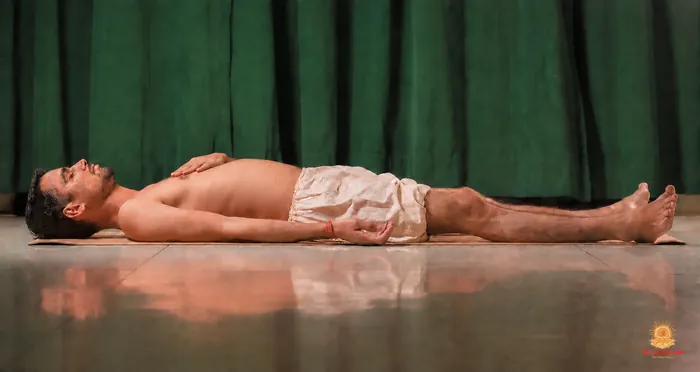
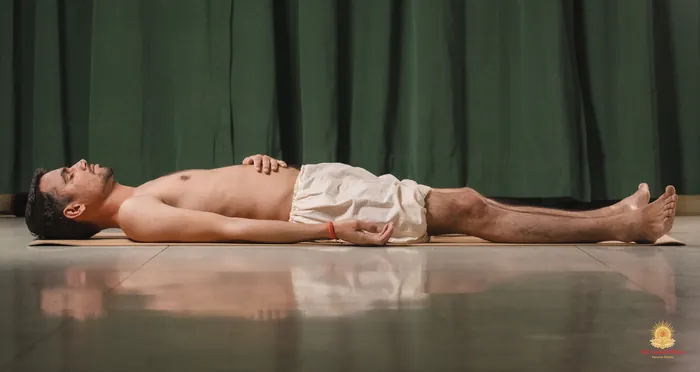
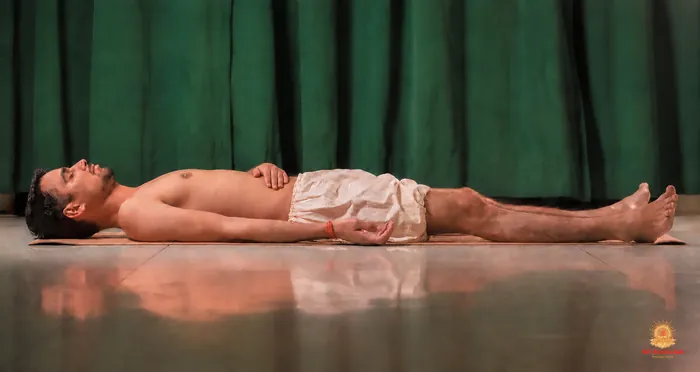
  1. Lie on your back. Legs a little apart, arms by your sides, palms turned up, eyes closed.
  2. Put one hand on your belly, just below the navel, and leave it there. It is going to tell you the truth whatever you believe you are doing.
  3. Breathe in and let the belly rise under your hand. The chest stays exactly where it is.
  4. Breathe out and let the belly sink. Do not push it down. Let it fall.
  5. Ten breaths.

Before you begin

Half a minute. Then we start.

  • Nothing is held. There is no retention anywhere in this, at the top or at the bottom.
  • If your head goes light or your hands tingle, stop and breathe normally until it passes. It usually means the breath was being pushed rather than let out.
  • Lie on your back on something flat. A mat, a blanket, the floor. Not a soft bed.
  • If lying flat is hard on the chest or the stomach, put a folded blanket under the head and shoulders.
  • Never strain to reach the count. If you have to, take the count below it. A smooth four is worth more than a ragged six.
  • Empty stomach, or about two hours after eating.
  • This supports treatment. It does not replace it, and anybody on buprenorphine or methadone stays on it.
Four sections, ten breaths each. The belly, then the chest, then the collarbones, and then all three as one breath.Four sections, ten breaths each. The belly, then the chest, then the collarbones, and then all three as one breath.Four sections, ten breaths each. The belly, then the chest, then the collarbones, and then all three as one breath.Four sections, ten breaths each. The belly, then the chest, then the collarbones, and then all three as one breath.Four sections, ten breaths each. The belly, then the chest, then the collarbones, and then all three as one breath.Four sections, ten breaths each. The belly, then the chest, then the collarbones, and then all three as one breath.Four sections, ten breaths each. The belly, then the chest, then the collarbones, and then all three as one breath.Four sections, ten breaths each. The belly, then the chest, then the collarbones, and then all three as one breath.Four sections, ten breaths each. The belly, then the chest, then the collarbones, and then all three as one breath.Four sections, ten breaths each. The belly, then the chest, then the collarbones, and then all three as one breath.Four sections, ten breaths each. The belly, then the chest, then the collarbones, and then all three as one breath.

Finished.

The reasoning

Why a man is taught to breathe in three pieces

A fair question, and the honest answer is in four parts. The last one is the limit of what we can say.

1. Almost nobody here is using the bottom of the breath

Watch a frightened man breathe and you will see his shoulders move and his belly stay still. That is the top of the breath doing all the work, and it is the least efficient part of it: the smallest volume for the most effort. Years of pain, years of a drug that slows breathing, and years of bracing against both, leave a man breathing almost entirely with the top of his chest and unaware that anything else was ever available.

The diaphragm has not gone anywhere. It is simply not being asked. The first section of this practice is the whole of asking.

2. Three pieces, because you cannot control what you cannot separate

This is how any movement is taught. Nobody learns to swim by swimming. The legs are learned, then the arms, then the breathing, and only then are they joined, because a movement practised only as a whole can be done badly forever without the man ever finding out which part is wrong.

So the belly is isolated until it moves alone, then the ribs, then the collarbones. Each section is dull on its own and each one is a piece of the fourth. When they are joined, a man who loses the bottom of the breath knows exactly what he has lost and how to get it back, because he has practised it by itself.

3. Why this one is first of the three practices here

Sama vritti asks you to fill and empty completely and then hold at both ends. Kapālabhāti asks the abdomen to work alone, sixty times a minute. Neither is available to a man who cannot yet put breath into his belly on purpose. This practice is what makes the other two possible, which is why it sits above them on this page.

It is also the gentlest thing in the whole protocol. It is done lying down, it asks for no strength, and it can be practised on a morning when nothing else can.

4. What we cannot say

Slow breathing has a real literature and the diaphragm has a real effect on the nervous system, but almost none of that work was done on men in opioid withdrawal, and none of it was done on this protocol. We have not tested it either, and what we have collected goes to a journal before it comes here.

So we will not tell you what this repairs. We will tell you what it trains, which is not in dispute, and leave the rest where it belongs.

back to the fourth phase →