The kindling
This is not a warm up. A warm up is what you do before the real thing. This is the first thing a body is asked for after years of being run on something else, and for a good while it is the whole of the practice.
It is called the kindling because that is what it does. Sūkṣma vyāyāma is the spark, every joint touched and woken from the crown downward. Sthūla vyāyāma is the flame catching, the whole body committed at once. What comes after it in this protocol, the breath and the sitting, has nothing to burn until this is done.
Two doors
The phase has two halves and they are taken in order. The subtle before the gross, always, on any morning you have both.
Sūkṣma Vyāyāmaसूक्ष्म व्यायाम
Every joint asked to move, from the crown downward. The photographs are being prepared and this door opens when they are here.
not yet hereSthūla Vyāyāmaस्थूल व्यायाम
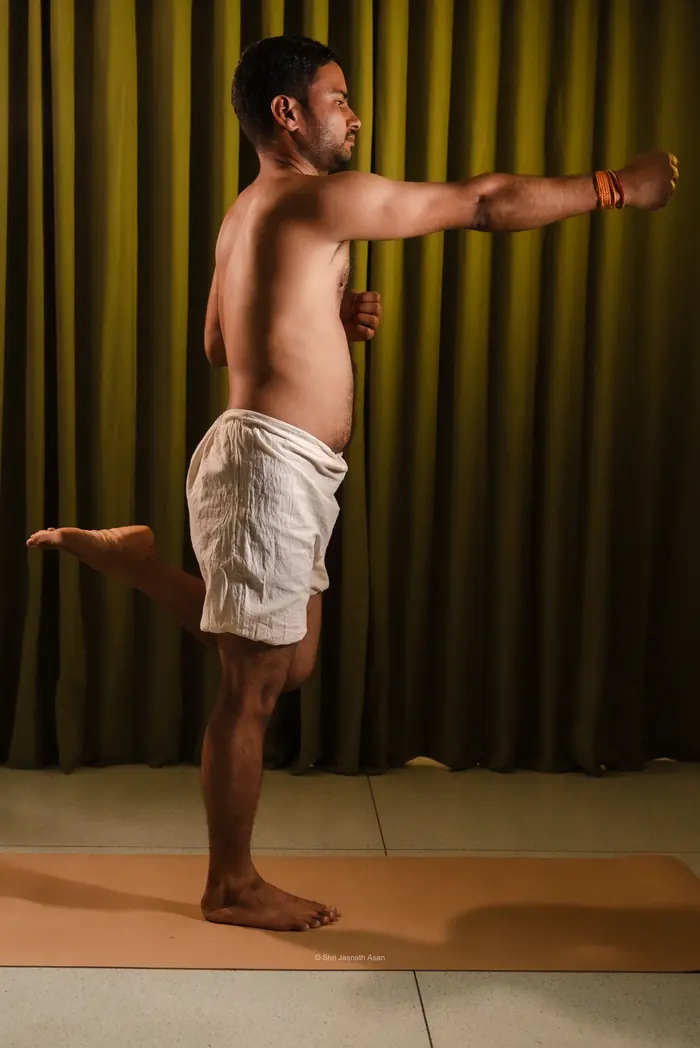
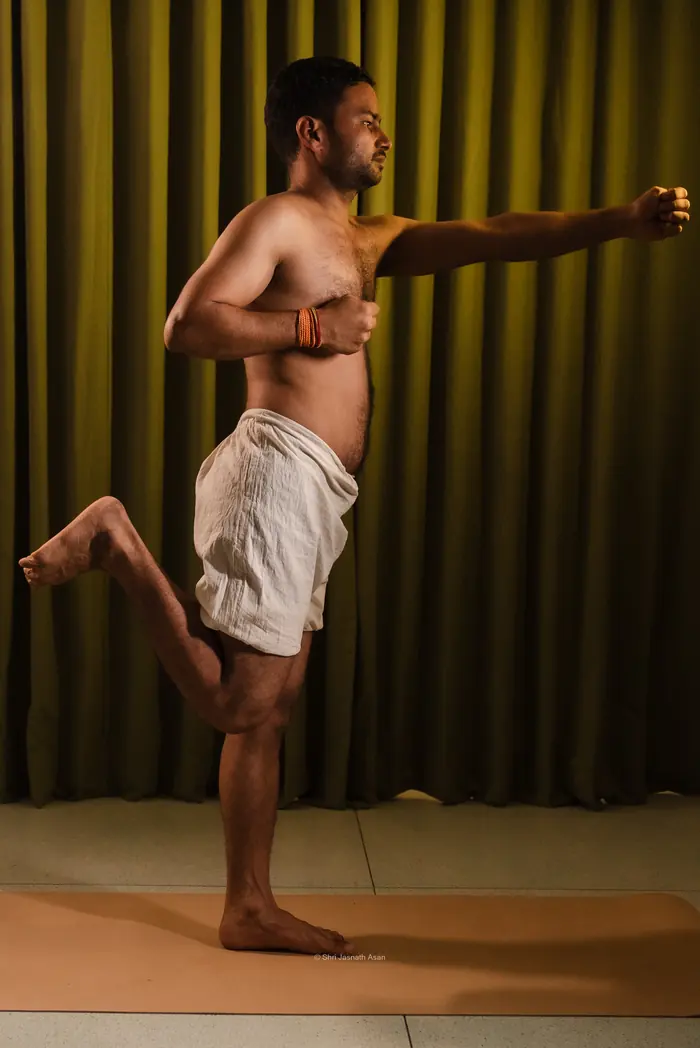
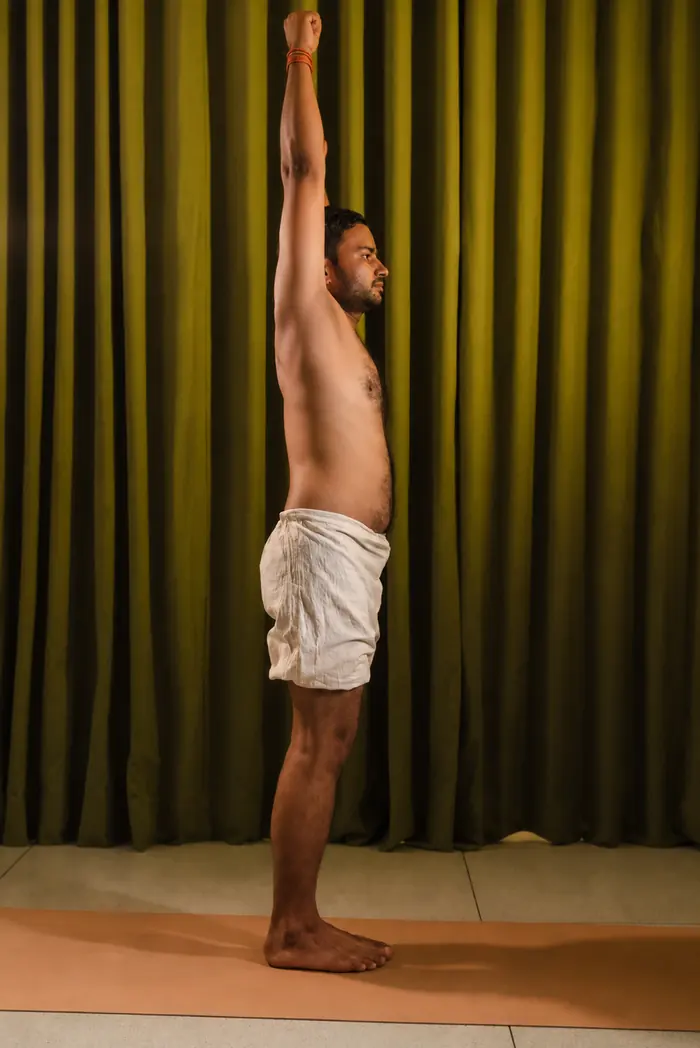
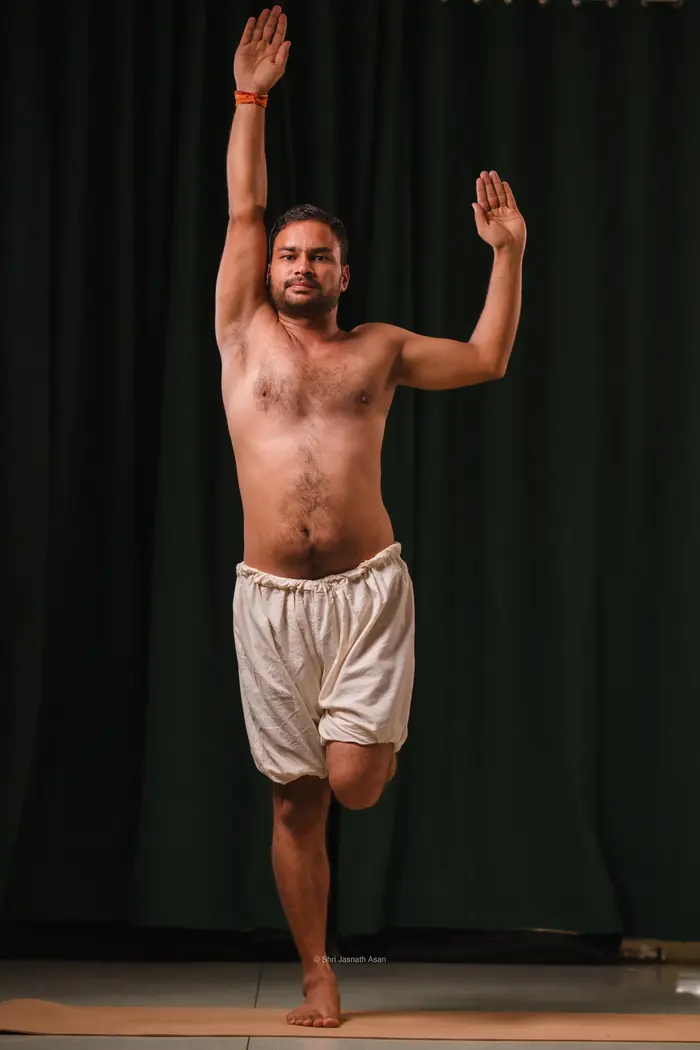
Five practices, dynamic, the whole body at once. Walking, running, jumping, reaching and circling.
Five practices, behind five doors
Open one and it loads below, with its own photographs, its own count and its own instructions. Or take all five in order, which is how they are meant to be taken.
Rekhā-gati · Walking in a straight line
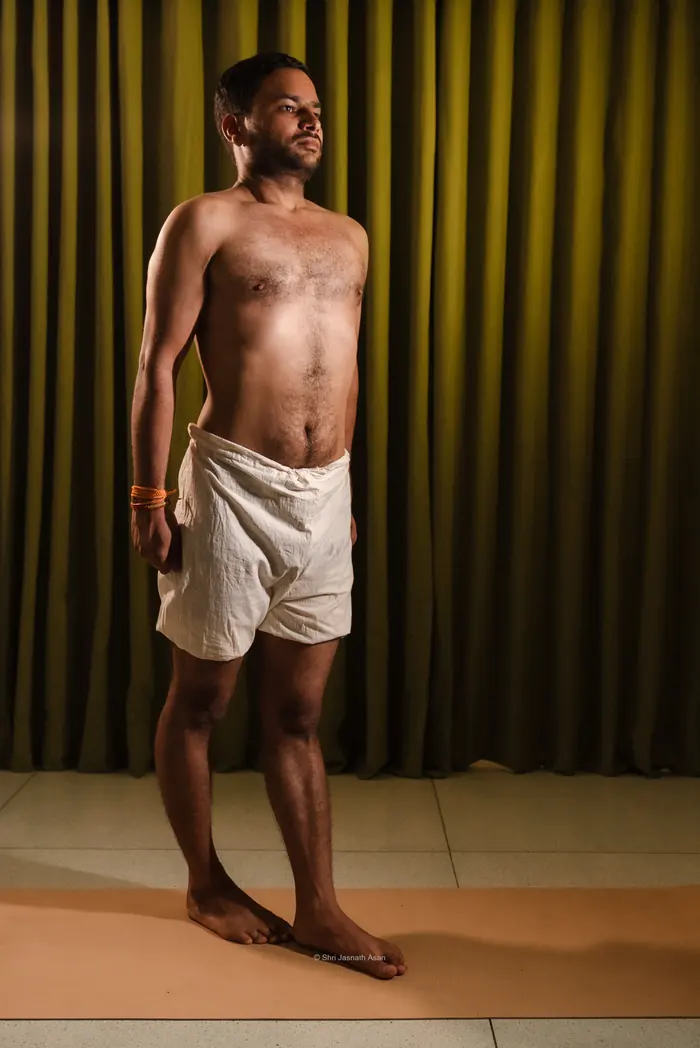
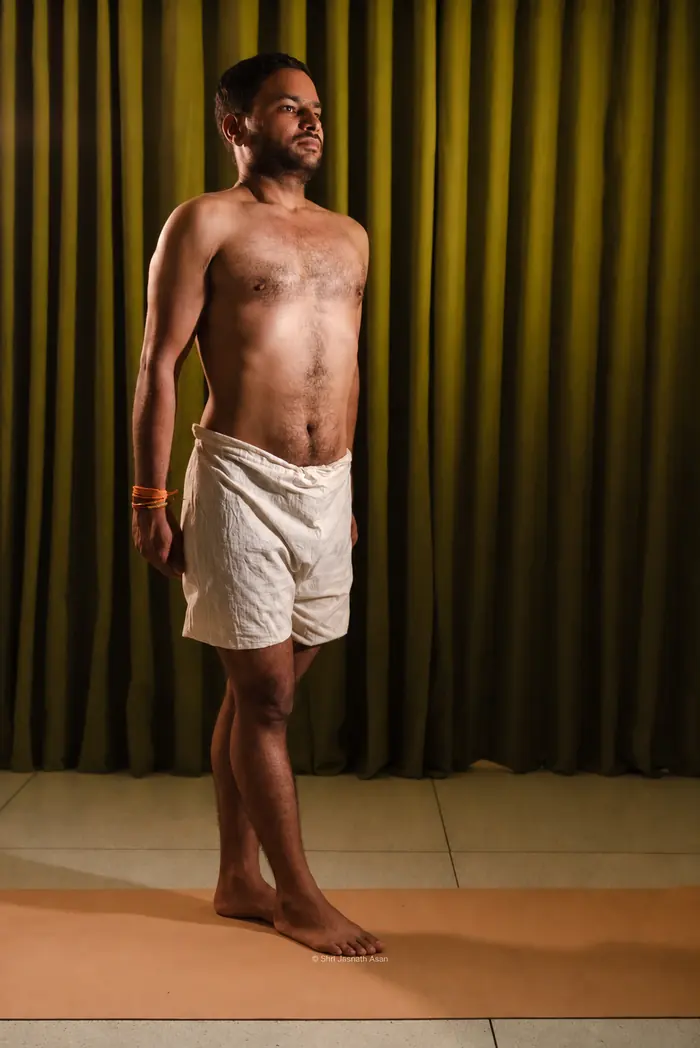
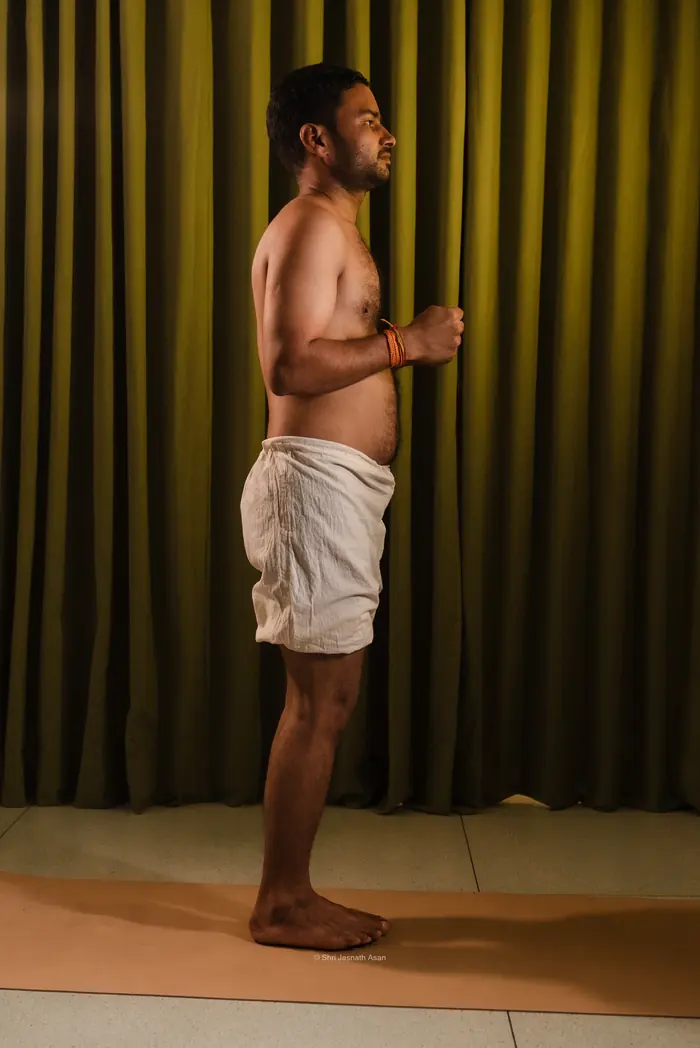
- Stand with the left foot where it is. Put the right foot directly in front of it, so that the right heel touches the toes of the left.
- Walk forward like that. Fifty steps, every heel touching the toes of the foot behind it, and the whole line straight.
- Then walk backward the same way, fifty steps, and keep the line straight going back as well.
- The eyes look ahead, not at the feet. The feet will find the line by themselves. Looking down is what makes a man wobble.
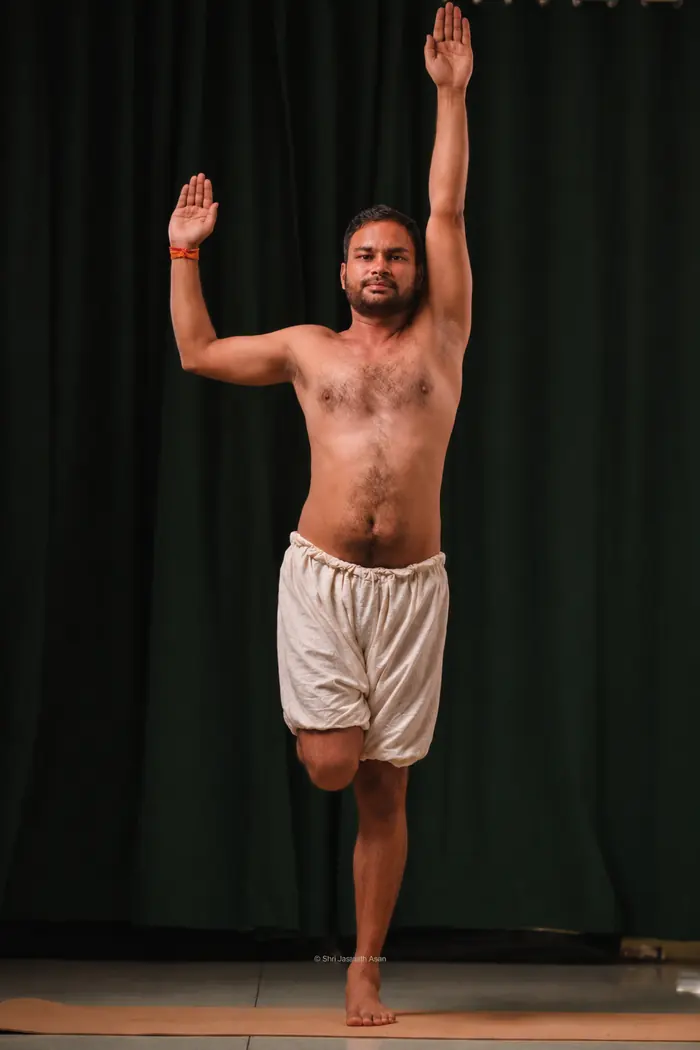
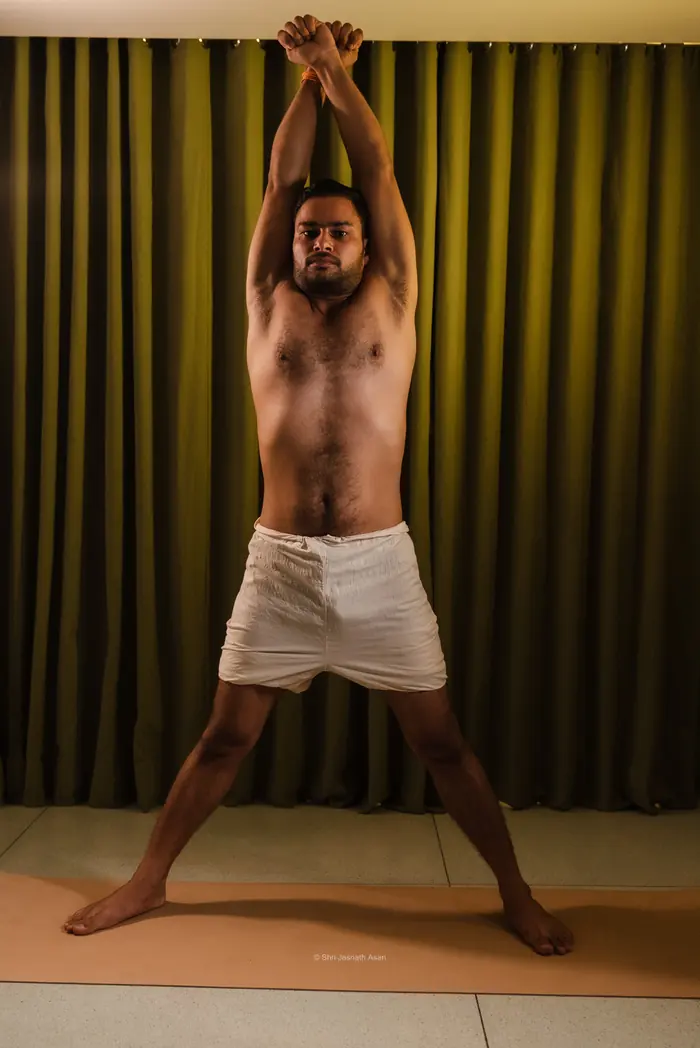
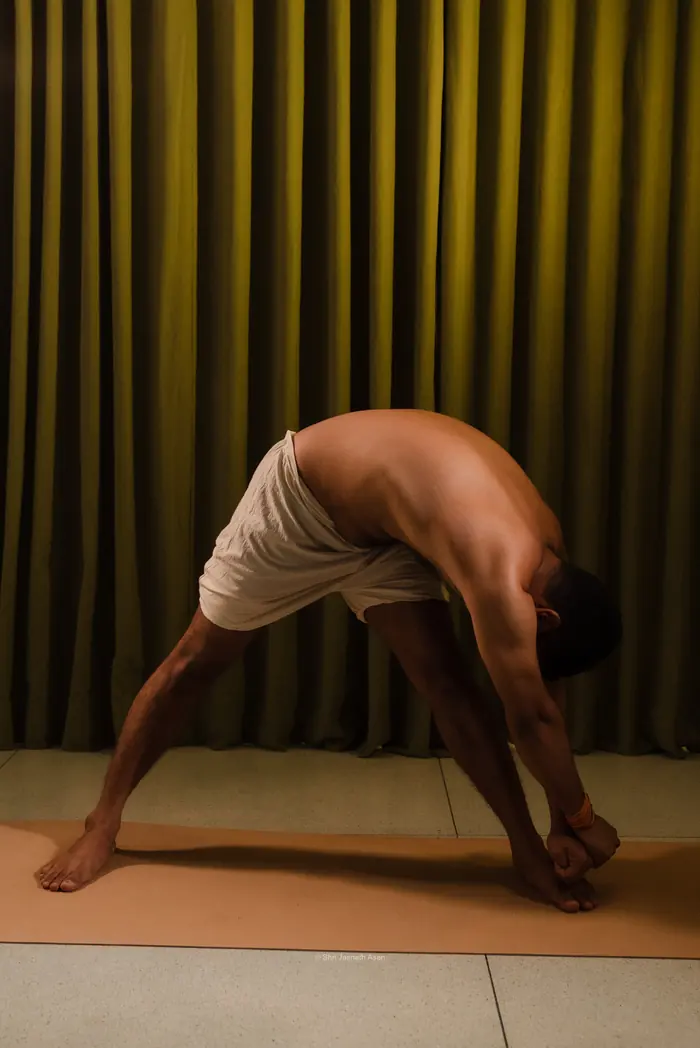
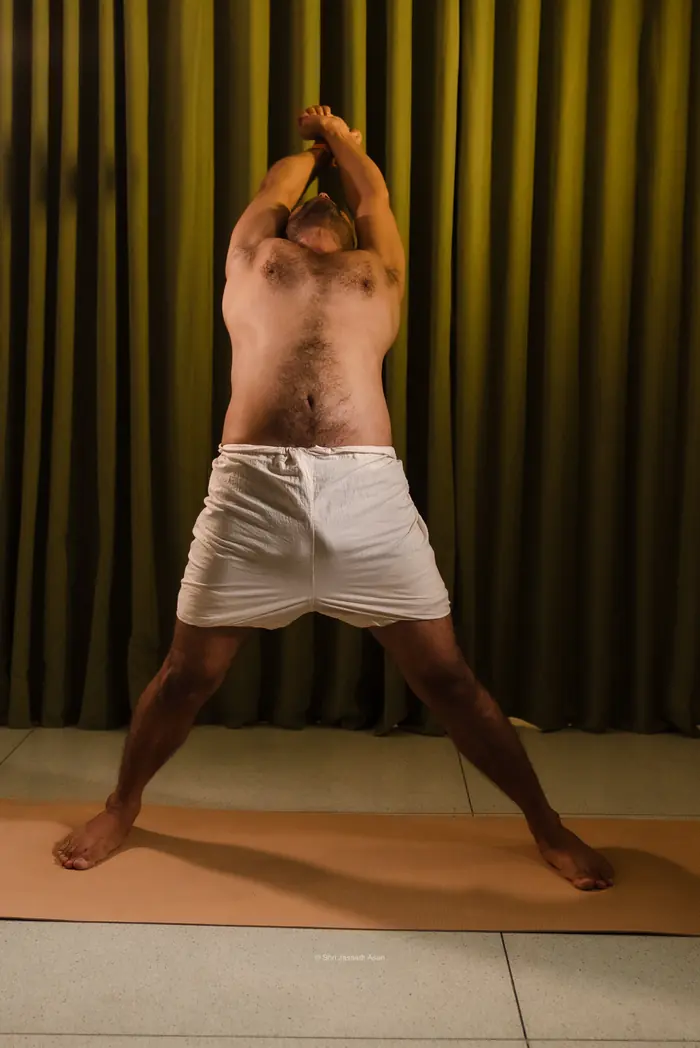
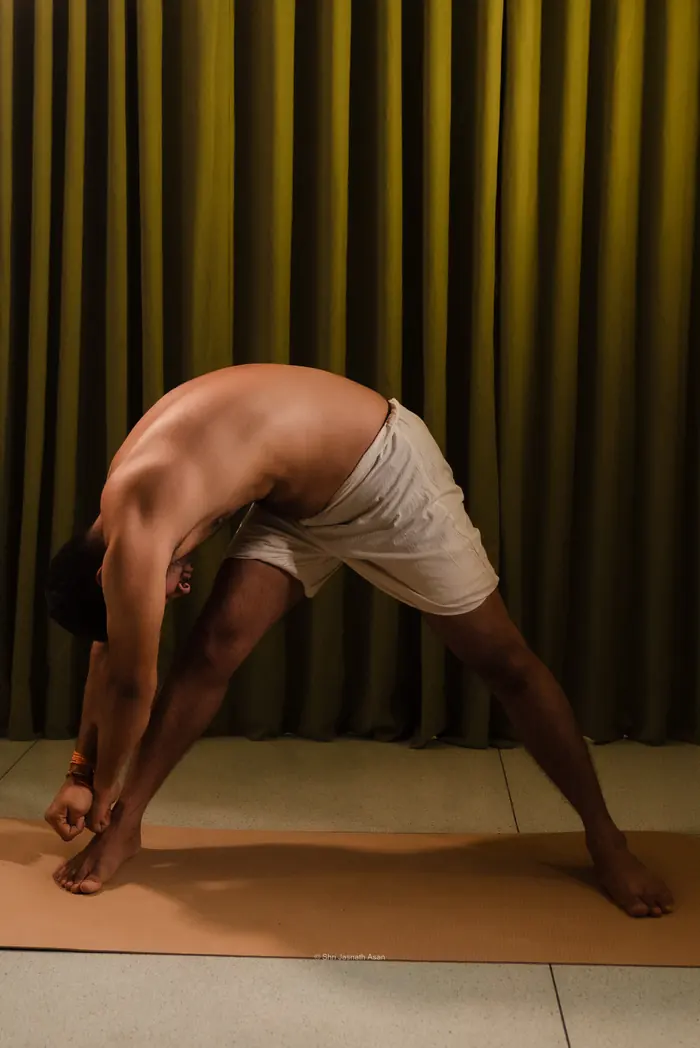
Before you start
- This is the first vigorous thing the day asks of you, and for many men here it is the first vigorous thing in years. That is not a warning. It is the reason the first morning is worth something.
- If the chest tightens, if the head swims, if there is pain anywhere that is not a muscle working, stop and sit down. Come back to it tomorrow.
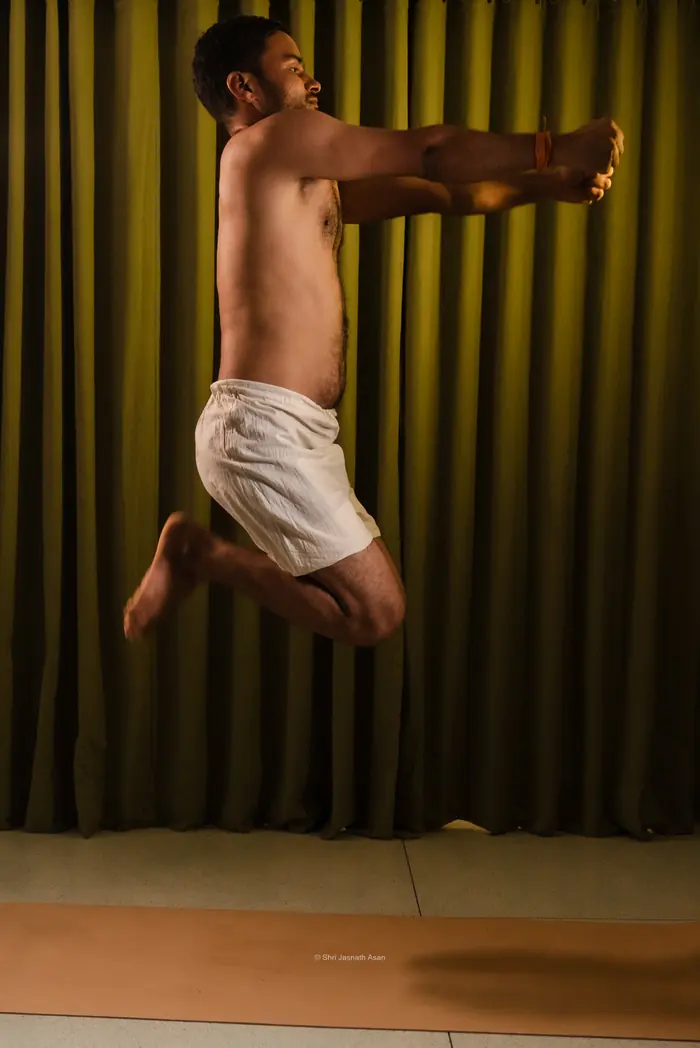
- The jumping practice lands hard. Sand, earth or a mat, never stone, and not at all while a knee or an ankle is complaining.
- The count is what the practice is. It is not a test of you. Thirty steps on the first morning and fifty in a fortnight is the practice working exactly as it should.
- Best on an empty stomach, or about two hours after eating.
- This does not replace medication. Anybody on buprenorphine or methadone stays on it.
- Severe withdrawal needs medical supervision, and this is not an alternative to it.
Where the numbers come from
The counts are Brahmachari's and are used exactly as he gives them: fifty steps out and fifty back, five jumps, twenty five raises. Sarvāṅga-puṣṭi is the one practice for which no count is stated, and ten is our decision, not his.
The speeds are ours. Nothing in the source states a tempo, so each one here is set from what the movement is: heel to toe walking is deliberate, a locomotive run is not, a jump is a few seconds by the source's own words, and Sarvāṅga-puṣṭi is slow because the source says twice that it is slow.
The half minute of standing still between practices is ours as well. The source runs them one into the next.
Where this is explained on this site
Nothing on this page argues for itself. Why the body is asked for this first, and what it is doing, is written out in the educative sessions.